
You get a chip in October and think nothing of it. Then one frosty morning in December you start the car, turn the defroster up, and watch a crack shoot across the glass. Here's why that happens and how to avoid it.
Glass hates fast temperature changes
Think of pouring boiling water into a cold glass jar. The inside expands faster than the outside, and the jar can crack. Your windshield works the same way. When the defroster blasts hot air on frozen glass, the inside warms up long before the outside does. A chip is a weak spot, so that's where the stress lets go.
Calgary makes it worse. A chinook can swing the temperature 20 degrees in a day, and then it drops right back down.
Water and ice get in
A chip is a tiny hole in the outer layer of glass. Water from snowmelt and car washes gets in, freezes, expands and pushes the chip open a little more each time.
Roads don't help
Potholes, frozen ruts and gravel on the roads all flex the body of the vehicle, and the windshield flexes with it.
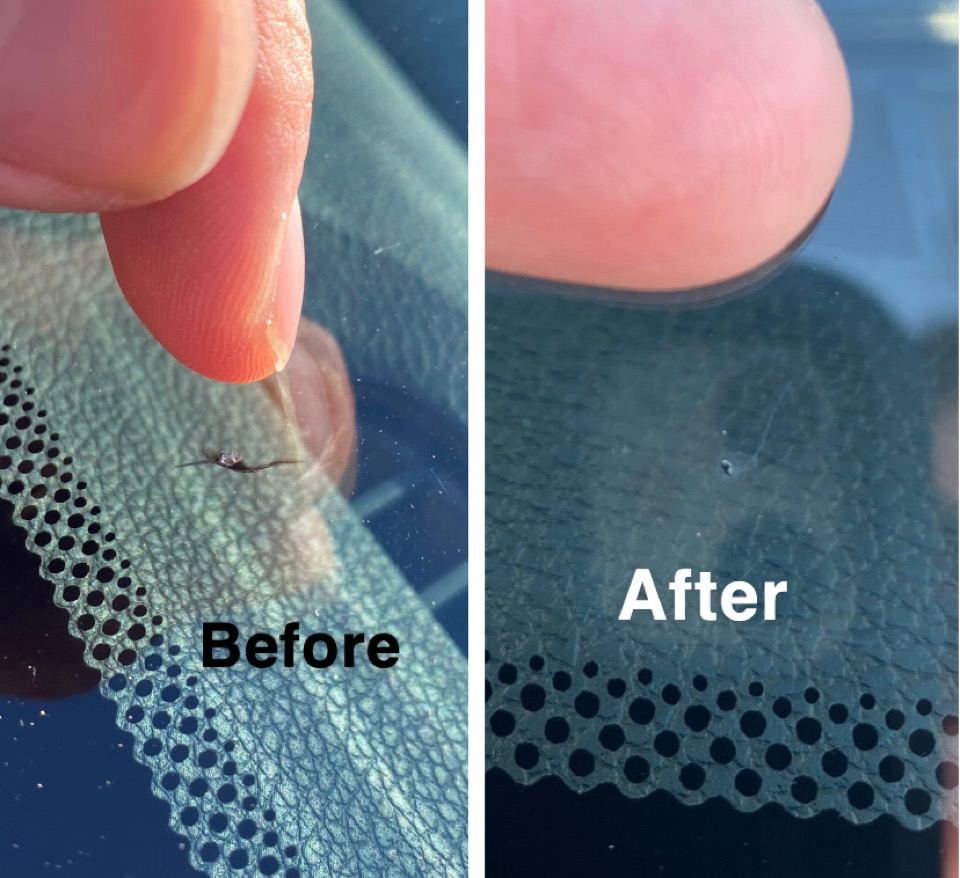
How to protect a chip until it's fixed
- Put clear tape over it to keep out water and dirt.
- Warm the car up gradually. Start with the defroster on low, or warm the cabin first.
- Don't pour hot water on an icy windshield. Ever.
- Skip the car wash, especially the high-pressure kind.
- Don't slam the doors.
Can chips be repaired in winter?
Yes. We warm the glass first so the resin flows into the chip and cures properly. A repair is $35 + GST for the first chip, takes about 30 minutes, and is far cheaper than a new windshield.
Got a chip? Text a photo to (587) 703-7819 or book a chip repair.